Planning an Arabic Website: Key Questions for Your Dubai Web Development Partner
Understanding the Basics of an Arabic Website Project
Building a website that serves an Arabic-speaking audience involves more than translating your existing English content. The Arabic language reads from right to left, which means the entire visual layout of your site must mirror that direction. This shift affects navigation menus, text alignment, image placement, and even how users interact with forms and buttons. If you are based in Dubai or targeting the UAE market, getting these details right from the start can save significant time and money.
Before you approach a web development company in Dubai, it helps to clarify what you need from a technical and content perspective. Many businesses assume that Arabic support is just a matter of switching the language setting on a content management system. In reality, a proper bilingual or Arabic-only website requires thoughtful preparation around layout, typography, and cultural context.
What Makes Arabic Website Design Different
The most visible difference is the right-to-left (RTL) direction of the script. English and other left-to-right (LTR) languages flow from the left edge of the page, so menus, logos, and call-to-action buttons are typically placed on the left. In an Arabic layout, the entire page structure flips: the main navigation moves to the right, the search bar sits on the right side, and the reading order of columns reverses. This is not just a mirror image of your English site. The spacing, font sizes, and line lengths all need adjustment to accommodate Arabic letterforms, which are cursive and vary in width.
Arabic typography also has its own set of rules. Fonts that look clean in Latin script may appear cramped or disjointed in Arabic. You need fonts that support the full range of Arabic characters, including initial, medial, and final forms of each letter. Some popular web fonts handle Arabic well, but many do not. Testing the rendering of your chosen font on different devices and browsers is a step that should not be skipped. The same goes for text expansion: Arabic text can be 20 to 30 percent longer than its English equivalent when translated. That means buttons, headlines, and form fields must be designed to accommodate extra characters without breaking the layout.
Questions to Discuss with Your Development Team
When you sit down with a web development company, the conversation should go beyond design mockups. Here are the areas that matter most for an Arabic website project.
1. How Will the Right-to-Left Layout Be Implemented?
Developers have two main approaches: using a framework that supports RTL natively, or manually adjusting CSS for direction and alignment. The best approach depends on the complexity of your site. A simple blog might only need a few CSS rules, while an ecommerce platform with product grids, filters, and shopping carts requires a more systematic solution. Ask whether the team will use a dedicated RTL stylesheet or rely on a framework like Bootstrap, which has built-in RTL support. Also confirm how they handle third-party plugins or widgets that may not respect the direction setting. Some plugins assume LTR and can break the layout if not tested thoroughly.

2. What Is the Plan for the Language Switcher?
If your site will serve both English and Arabic users, the language switcher needs to be easy to find and intuitive to use. A common pattern is to place a toggle in the top navigation bar. But the switching logic matters too. When a user switches from English to Arabic, the page should load the Arabic version of the same content, not just the homepage. The URL structure should also be clear, either with subdirectories (example.com/ar/) or subdomains (ar.example.com). Discuss how the team plans to manage the relationship between the two language versions, and whether they use hreflang tags to tell search engines which page corresponds to which language. This helps avoid duplicate content issues and improves the search experience for users searching in Arabic.
3. How Will Content Localization Be Handled?
Localization goes beyond translation. It means adapting the tone, imagery, and cultural references for the Arabic-speaking audience. For instance, colors that work well in a Western context might carry different meanings in the Arab world. Green is generally positive, but certain shades of purple or yellow can be associated with mourning or caution. Likewise, images showing people in casual dress or certain gestures may not be appropriate. Discuss with your development partner how the content will be sourced, reviewed, and updated. Will you provide the Arabic text, or will the agency work with a translator? If there is a bilingual content team, make sure the development process allows for easy updates without needing to rebuild pages.
Technical Considerations for Bilingual Navigation
A bilingual site needs a navigation system that works seamlessly in both directions. In English mode, the menu reads left to right, with the logo on the left and the main links to the right. In Arabic mode, the logo moves to the right, and the menu items align to the right side. This shift should happen smoothly when the user switches languages. Some sites keep the logo fixed on one side for brand consistency, but that can confuse users who expect a mirrored layout. There is no single right answer, but the team should explain the trade-offs and show you a working prototype before committing to a design.
Another detail is the placement of the search bar. In LTR layouts, the search icon is usually at the top right. In RTL, it logically moves to the top left. Similarly, form fields, dropdown menus, and modal windows all need to flip direction. A common oversight is the alignment of error messages. An error message that appears to the right of a field in English should appear to the left in Arabic. These small details affect usability and make the site feel native to Arabic speakers.
Arabic RTL Website Design in Practice
When you work with a Dubai web design agency that has experience with bilingual projects, you can expect them to bring up Arabic RTL website design early in the planning phase. This is the moment to discuss whether your site will be built from scratch with RTL support or adapted from an existing LTR template. Each path has its advantages. Building from scratch gives you full control over the layout and performance, but it takes longer. Adapting an existing template is faster, but you may run into limitations with certain design elements or scripts. A good agency will help you weigh the options based on your timeline, budget, and the complexity of your content.
The same conversation should cover how the site handles bidirectional text. For example, if your Arabic page includes an English brand name or a phone number, the browser needs to know which direction to apply. The HTML direction attribute (dir="rtl") and the Unicode bidirectional algorithm handle most cases, but there are edge cases where content gets scrambled. Testing with real content, not placeholder text, is essential.
What This Means for Your Project Timeline and Content
Building an Arabic website usually takes longer than a single-language English site. The extra time goes into design adjustments, font testing, content translation, and quality assurance. Plan for at least one additional round of review focused specifically on the Arabic interface. Ask your development partner to provide a staging environment where you can test every page in both languages before launch. Pay attention to text truncation, broken layouts, and the behavior of interactive elements like sliders or accordions.

Content preparation also takes more effort. If you are starting from scratch, you need to write or commission Arabic copy that matches the tone of your brand. Machine translation can give you a rough draft, but it often misses cultural nuances and produces awkward phrasing. A professional translator who understands your industry is a better investment. Once the copy is ready, the development team can insert it into the site structure, but you should verify that the line lengths and spacing work with your chosen fonts.
Cultural Context and User Experience
Beyond the technical side, think about how the design reflects the cultural preferences of your audience. Arabic users often prefer a more visual and spacious layout compared to the dense, text-heavy pages common in English business sites. They also expect fast-loading pages and clear calls to action. The use of icons can help bridge the language gap, but make sure the icons are culturally appropriate. For example, a thumbs-up gesture might be positive in some cultures but offensive in others. Similarly, images of food or drink should avoid showing alcohol or pork if your audience is predominantly Muslim.
Social media integration is another area to consider. Platforms like Instagram and WhatsApp are extremely popular in the UAE, and many users expect to find links to these channels on your website. The placement of social icons should follow the same RTL logic, appearing on the right side in the Arabic version. Also, think about the direction of any embedded feeds or widgets. If your English site shows a Twitter timeline that scrolls left to right, the Arabic version should scroll right to left.
Search Engine Visibility for Arabic Content
Search engines handle Arabic content well, but you need to set up the technical foundation correctly. Use hreflang tags to indicate the language and region of each page. For example, a page at example.com/ar/ should have a hreflang tag pointing to "ar" for Arabic, while the English version points to "en". This helps Google serve the right version to users based on their language settings. Also, make sure the sitemap includes both language versions and that the URLs are clean and descriptive. Arabic characters in URLs are supported, but some SEO professionals prefer to use transliterated slugs (like /khadamat/ instead of the Arabic script) because they are easier to share and less prone to encoding errors. Discuss this with your development team to decide what works best for your target audience.
Content in Arabic also benefits from proper use of headings, meta descriptions, and alt text. Each language version should have its own SEO metadata. Don't rely on automated translation for these fields; write them manually to ensure they are accurate and natural. This is especially important for the meta description, as it appears in search results and influences click-through rates.
Testing and Launch Preparation
Before you go live, run through a checklist that covers both languages. Check that every link works, every form submits correctly, and every button responds as expected. Test the site on mobile devices, since a large portion of web traffic in the UAE comes from smartphones. Mobile responsiveness is even more critical for RTL layouts, because the screen width is limited and text expansion can cause overlapping elements.
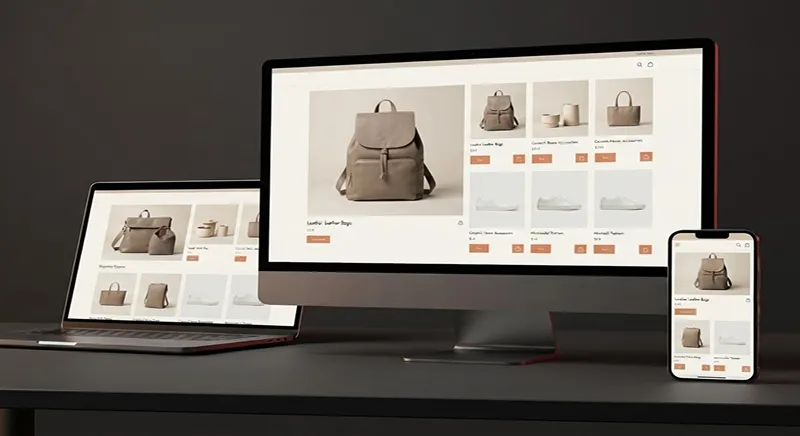
Ask your development partner to test the site with actual Arabic content, not placeholder Lorem ipsum. Lorem ipsum is based on Latin script and does not show how Arabic letters connect or how line breaks will behave. Use real paragraphs, real navigation labels, and real product descriptions. If possible, have a native Arabic speaker review the interface for readability and cultural appropriateness.
Finally, set up a plan for ongoing maintenance. Content updates, new pages, and third-party integrations all need to preserve the RTL layout. If you add a new plugin or feature down the road, test it in both language versions before deploying it. The same goes for any changes to the font stack or color scheme. Consistency across languages builds trust with your audience and reinforces your brand presence in the region.
Designing an Arabic website that feels natural and professional requires attention to many layers, from the direction of the layout to the choice of images. By asking the right questions early and working with a team that understands Arabic RTL website design, you can avoid costly revisions and launch a site that serves your users well. Whether you are a local business in Dubai or a global company expanding into the Middle East, getting the details right makes the difference between a site that works and one that truly connects.